It is easy to confuse a crossbite with an underbite. Both describe problems with the way the upper and lower teeth come together, and both can affect more than the appearance of a smile. The difference comes down to which teeth are affected, how the bite is positioned, and what may be contributing to the problem.
At Barlow Orthodontics, we evaluate the entire bite rather than focusing only on whether individual teeth look straight. Depending on a patient’s age, bite, and orthodontic needs, treatment may involve braces, clear aligners, or other orthodontic approaches. Understanding whether you have a crossbite, an underbite, or another type of bite concern is the first step toward determining which treatment options may be appropriate.
What Is a Crossbite?
A crossbite occurs when one or more upper teeth sit inside the lower teeth when the mouth is closed. Normally, the upper teeth generally sit slightly outside the lower teeth. With a crossbite, that relationship is reversed in a particular area of the mouth.
Crossbites can involve the front teeth, back teeth, or both. A front tooth that sits behind a lower tooth may be described as an anterior crossbite. A posterior crossbite affects teeth farther back in the mouth and may occur on one side or both sides.
A crossbite can develop for several reasons. Tooth position, jaw development, genetics, prolonged oral habits during childhood, or differences in when baby and permanent teeth erupt may play a role. Because the causes vary, an orthodontic evaluation is useful for determining whether the issue primarily involves tooth position, jaw development, or a combination of factors.
What Is an Underbite?
An underbite describes a bite in which the lower front teeth sit in front of the upper front teeth when the jaws are closed. In orthodontics, this relationship may be associated with a Class III bite pattern.
Some underbites are relatively mild and primarily involve the position of the teeth. Others are related more strongly to the way the upper and lower jaws have developed. For example, the lower jaw may project farther forward, the upper jaw may be positioned farther back, or both factors may contribute.
An underbite can sometimes affect chewing, tooth wear, speech, or the way the lips and facial profile appear. The effects are different for every patient, which is why treatment decisions should be based on a complete examination rather than appearance alone.
The Main Difference Between a Crossbite and an Underbite
The simplest distinction is that a crossbite can affect individual teeth or groups of teeth in different areas of the mouth, while an underbite generally describes the overall front-to-back relationship in which the lower front teeth extend ahead of the upper front teeth.
A patient can have a crossbite without having an underbite. For example, the back teeth on one side of the upper jaw might bite inside the lower teeth while the front teeth have a typical relationship. Similarly, an anterior crossbite involving one or two teeth does not necessarily mean the patient has a true underbite involving the broader jaw relationship.
It is also possible for bite problems to overlap. Orthodontic terminology can become confusing when several teeth and jaw relationships are involved, so an examination and diagnostic records are more reliable than trying to identify the problem from a mirror or photograph.
What Causes Crossbites and Underbites?
Genetics can influence both tooth position and jaw growth, making family history one possible factor in bite development. Some children naturally develop differences in the size or position of the upper and lower jaws. Crowding and unusual tooth eruption patterns can also contribute to crossbites.
Childhood habits may influence developing teeth and jaws as well. Depending on the habit, its duration, and the child’s stage of growth, prolonged thumb or finger sucking and other oral habits can affect tooth and jaw relationships. Not every child with one of these habits develops a crossbite or another orthodontic problem.
Underbites often have a significant skeletal or hereditary component, although tooth position can also contribute. Determining the underlying cause matters because moving teeth and addressing a jaw-related discrepancy are not necessarily approached in the same way.
Why Bite Problems Are Worth Evaluating
A crossbite or underbite does not automatically mean a patient will experience serious dental problems. However, certain bite relationships can place uneven forces on teeth or interfere with comfortable function. Over time, some patients may experience abnormal tooth wear, difficulty biting or chewing, or other concerns related to how the teeth meet.
With certain crossbites, a patient may shift the lower jaw to one side when closing the mouth to find a comfortable biting position. In a growing child, this type of functional shift is one reason an orthodontist may recommend monitoring or treating the bite rather than simply waiting for all permanent teeth to erupt.
For adults, evaluation remains worthwhile even though jaw growth is complete. Adult orthodontic treatment can often improve tooth alignment and certain bite relationships, although treatment options depend on whether the problem is primarily dental or skeletal and how significant it is.
When Should a Child Be Checked for a Crossbite or Underbite?
The American Association of Orthodontists recommends that children have an orthodontic checkup no later than age 7. This does not mean every 7-year-old needs braces. At that age, however, an orthodontist can evaluate developing permanent teeth and jaw growth while a child still has a mixture of baby and permanent teeth.
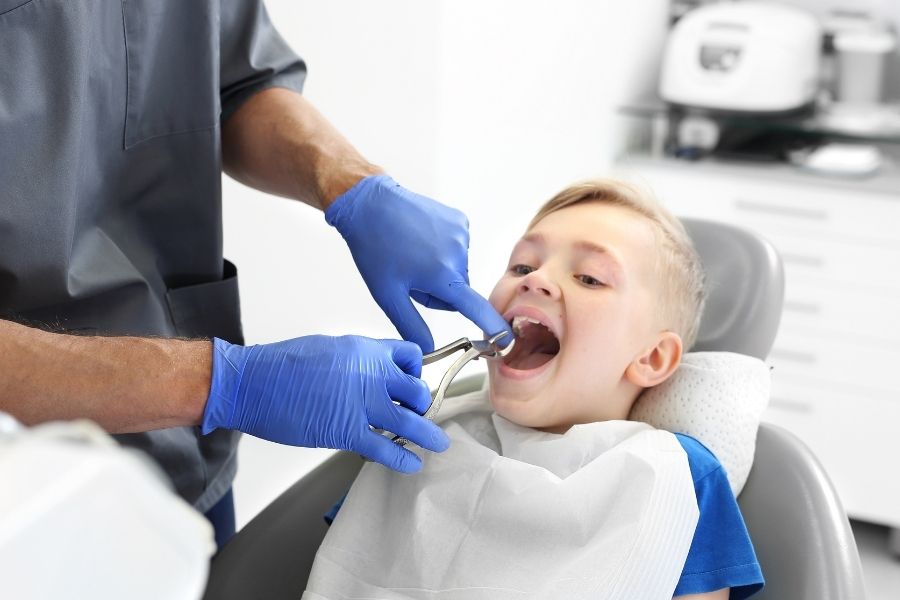
Early orthodontic treatment may be considered when there is a specific reason to intervene during growth. Certain crossbites and developing underbites are examples of problems an orthodontist may want to evaluate early. In other situations, the best approach may simply be observation until additional permanent teeth erupt.
At Barlow Orthodontics, our goal is to recommend treatment when it can provide a meaningful benefit, not simply because a child has reached a certain age. Timing should be based on the individual patient’s growth, dental development, and specific bite.
How Are Crossbites and Underbites Treated?
Treatment varies considerably because the same bite description can have different underlying causes. For a crossbite caused mainly by tooth position, orthodontic appliances may be used to guide teeth into a healthier relationship. In growing patients with certain jaw-width concerns, an orthodontist may consider an appliance designed to address development of the upper arch.
Braces can provide precise control over tooth movement and may be appropriate for children, teens, and adults. Clear aligners may also be an option for selected crossbites and other bite concerns, particularly when the necessary movements can be predictably managed with removable aligners.
Underbite treatment depends heavily on age and whether the discrepancy involves the teeth, jaws, or both. Growth-related treatment may be considered for some younger patients. Adults with significant skeletal underbites may have different treatment considerations, and some complex cases can require collaboration with other dental or surgical specialists. A consultation is necessary to determine which approach fits a particular patient.
Can You Tell Which Bite Problem You Have at Home?
You may be able to notice that your teeth do not meet normally, but accurately identifying the type and cause of a bite problem is more difficult. Two bites that look similar from the front can have very different tooth and jaw relationships.
An orthodontic evaluation allows us to examine how the teeth fit together, how the jaws relate, and whether there are concerns involving growth, crowding, tooth position, or function. Diagnostic imaging and other records may also be recommended when needed to understand the bite more completely.
If you or your child has teeth that appear to bite backward, a lower jaw that seems to sit ahead of the upper jaw, or a bite that shifts to one side, an orthodontic consultation can provide a clearer answer.
When to Have Your Bite Evaluated
Crossbites and underbites can involve tooth position, jaw development, or both. Because the underlying cause can affect treatment decisions, an orthodontic evaluation is the best way to understand the type and severity of the bite problem.
If the teeth do not meet normally, the bite shifts to one side, or the lower front teeth sit ahead of the upper teeth, consider having the bite evaluated. An orthodontist can determine whether treatment, monitoring, or no immediate action is appropriate.